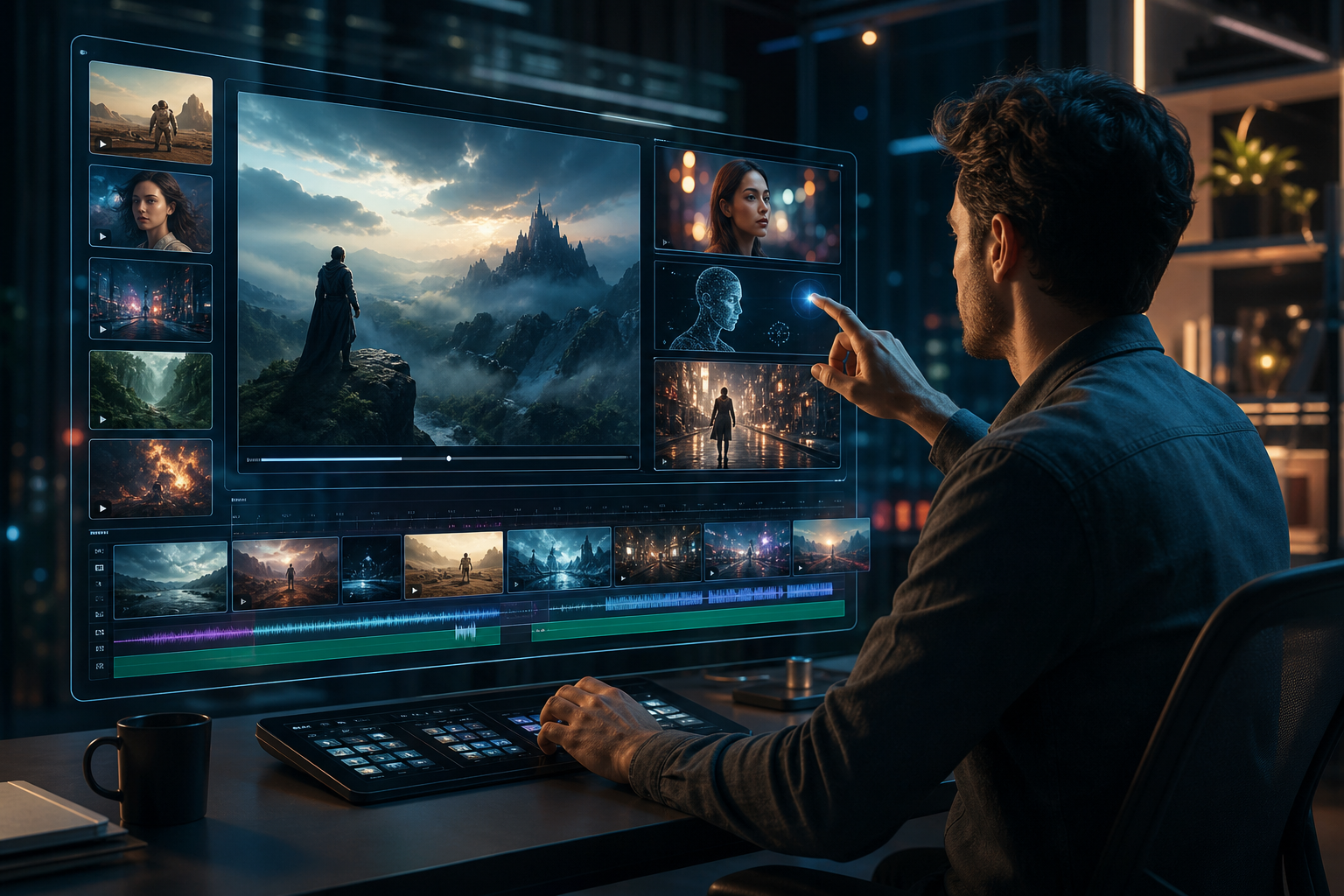
Mastering AI Art: Crafting Prompts for Stunning Design Results
Discover how designers can transform AI image generation from guesswork to mastery. This guide demystifies prompt writing, helping you create stunning, usable AI art for your projects.
By Rollan Bañez · October 5, 2026 · 8 min read
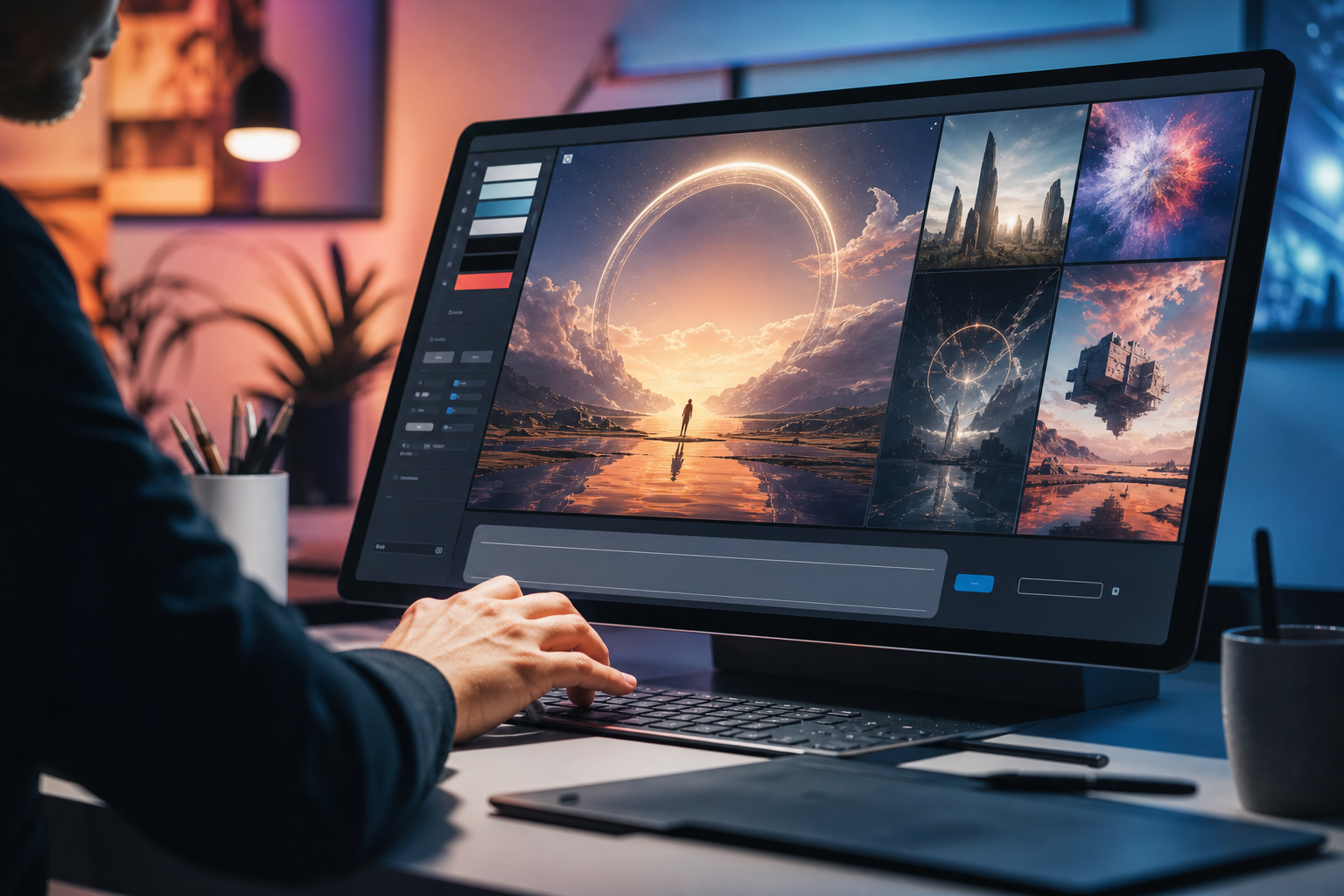
The landscape of design is undergoing a rapid, revolutionary shift, largely fueled by advancements in artificial intelligence. Generative AI tools, once a niche novelty, are now indispensable allies for creatives seeking efficiency and boundless inspiration.
For designers, the ability to translate conceptual ideas into tangible visual assets instantly is a game-changer. Yet, the true potential of AI lies not just in its existence, but in mastering the art of communication with it – specifically, through effective prompt writing.
The Dawn of Generative AI in Design
Generative AI, particularly in the realm of image creation, has moved from abstract research to practical application at an astonishing pace. Tools like Adobe Firefly are democratizing access to powerful creative capabilities, allowing designers to iterate faster and explore new aesthetics.
This technology empowers designers to bypass traditional barriers, from sourcing stock images to complex 3D rendering. It fundamentally reshapes design workflows, enabling unprecedented levels of visual experimentation and production.
Understanding the AI's 'Language'
At its core, AI image generation works by interpreting natural language descriptions – prompts – and synthesizing visual outputs. Think of it as instructing a highly skilled, but literal, assistant. The clarity and specificity of your instructions directly impact the quality and relevance of the results.
A well-crafted prompt acts as a blueprint, guiding the AI model towards your desired outcome. Without precise guidance, the AI's output can be generic, abstract, or simply not aligned with your creative vision.
Anatomy of an Effective Prompt for Designers
Crafting effective prompts is less about magic and more about structure and precision. It involves breaking down your visual idea into components the AI can understand and synthesize. This process transforms guesswork into a strategic creative act.
Key Elements of a Powerful Prompt
To consistently generate usable AI images, consider these foundational elements for your prompts:
- Subject: Clearly define the main focus of your image. What is the central object, person, or scene?
- Style & Aesthetics: Specify artistic movements (e.g., 'impressionistic,' 'cyberpunk'), art forms (e.g., 'digital painting,' 'photorealistic'), or material properties (e.g., 'glossy,' 'textured').
- Lighting: Describe the light source, intensity, and mood (e.g., 'golden hour,' 'harsh studio light,' 'dramatic chiaroscuro').
- Composition & Angle: Guide the AI on framing, perspective, and depth (e.g., 'wide shot,' 'close-up,' 'low angle,' 'rule of thirds').
- Color Palette: Suggest specific colors, color schemes, or overall mood (e.g., 'monochromatic blue,' 'vibrant analogous colors,' 'earthy tones').
- Details & Modifiers: Add granular specifics like textures, environmental elements, or emotional tones (e.g., 'dew drops,' 'steaming coffee,' 'serene atmosphere').
The Power of Iteration and Refinement
Prompt writing is an iterative process. Rarely will your first attempt yield the perfect image. Experiment, observe the AI's responses, and refine your prompts based on the output. Think of it as a creative dialogue.
Small adjustments to keywords can dramatically alter the results. This dynamic feedback loop is crucial for honing your prompt engineering skills and achieving precise creative control.
Advanced Prompting Techniques for Professional Output
Once you grasp the basics, explore more sophisticated techniques to push the boundaries of AI-generated visuals. These methods help designers achieve higher fidelity and more nuanced artistic expressions.
Negative Prompts and Weighting
Just as important as telling the AI what to include is telling it what to exclude. Negative prompts allow you to specify elements or qualities you want to avoid (e.g., 'no blur,' 'ugly,' 'text').
Some platforms also support weighting, where certain keywords or phrases can be emphasized or de-emphasized. This fine-tunes the AI's focus, ensuring critical elements are prioritized in the final render.
Leveraging Reference Images and Styles
Many advanced AI models allow designers to upload reference images or styles. This provides the AI with a visual context, enabling it to match aesthetics, composition, or even specific elements from your input.
This technique is invaluable for maintaining brand consistency or translating existing design concepts into new AI-generated variations. It bridges the gap between pre-existing visual assets and novel AI creations.
Integrating AI-Generated Images into Design Workflows
Beyond generating standalone images, the real value of effective prompt writing lies in its integration into a streamlined design process. AI becomes a force multiplier, enhancing efficiency and expanding creative possibilities.
For example, designers can rapidly generate mood boards, explore multiple logo variations, or create unique background textures. This significantly accelerates the ideation phase, allowing more time for critical refinement and client feedback.
Adobe Firefly and the Creative Cloud Ecosystem
Adobe Firefly stands out for its deep integration with the Creative Cloud. Designers familiar with Photoshop, Illustrator, and other tools can leverage Firefly's generative capabilities directly within their existing workflows. This seamless experience minimizes learning curves and maximizes productivity.
Creative Nation Academy offers specialized courses and Adobe Certified Professional training that delve into these integrated workflows. Understanding these connections is vital for any designer looking to stay competitive.
Key Takeaways for Designers
Mastering prompt writing is an essential skill for the modern designer. It's the key to unlocking the full potential of generative AI for creative work. Here’s what to remember:
- Prompt writing is a communication skill: Be clear, specific, and detailed.
- Break down concepts: Use elements like subject, style, lighting, and composition.
- Iterate and refine: Experiment with prompts, observe outputs, and adjust.
- Utilize advanced techniques: Employ negative prompts, weighting, and reference images.
- Integrate into workflow: Use AI for ideation, variation, and accelerating production.
- Stay updated: The technology evolves quickly; continuous learning is crucial for mastering AI for creatives.
The Future of Design: Prompt Engineering as a Core Skill
The ability to effectively communicate with AI models is no longer an optional add-on; it's becoming a foundational skill for designers across all disciplines. As AI tools grow more sophisticated, so too will the demand for professionals who can harness their power with precision.
Embracing prompt writing for designers means stepping into a future where creativity is augmented, not replaced. It empowers you to explore unprecedented visual territories and deliver innovative solutions at speeds previously unimaginable.
At Creative Nation Academy, we believe in equipping creatives and educators with the skills to thrive in this evolving landscape. Explore our programs on AI for Creatives & Educators to elevate your expertise and shape the future of design.
Frequently asked questions
- What is prompt writing for designers?
- Prompt writing for designers is the skill of crafting clear, specific text commands (prompts) to instruct generative AI tools, like Adobe Firefly, to create desired visual outputs. It involves detailing elements such as subject, style, lighting, and composition to achieve usable AI images for design projects.
- Why is prompt writing important for designers using AI?
- Effective prompt writing is crucial because it directly determines the quality and relevance of AI-generated images. Without precise instructions, AI outputs can be generic or inaccurate. Mastering prompts allows designers to achieve specific artistic visions, accelerate ideation, and integrate AI seamlessly into their workflows.
- What are some key elements to include in an AI image prompt?
- Key elements include the main subject, desired artistic style (e.g., 'photorealistic,' 'digital painting'), lighting conditions (e.g., 'golden hour,' 'dramatic'), composition and angle (e.g., 'wide shot,' 'close-up'), specific color palettes, and any intricate details or modifiers you want to appear in the image.
- How can designers improve their AI prompt writing skills?
- Designers can improve by practicing iterative refinement, experimenting with different keywords and structures, using negative prompts to exclude unwanted elements, and leveraging reference images or style transfers when available. Continuous learning and observing how AI responds to various inputs are also vital.