AI Video Tools: The Future of Creative Storytelling – What's Possible Now?
AI video tools are rapidly transforming content creation. This post unpacks their current capabilities and limitations, offering a clear perspective for creatives and educators navigating this evolving landscape.
By Rollan Bañez · September 19, 2026 · 9 min read
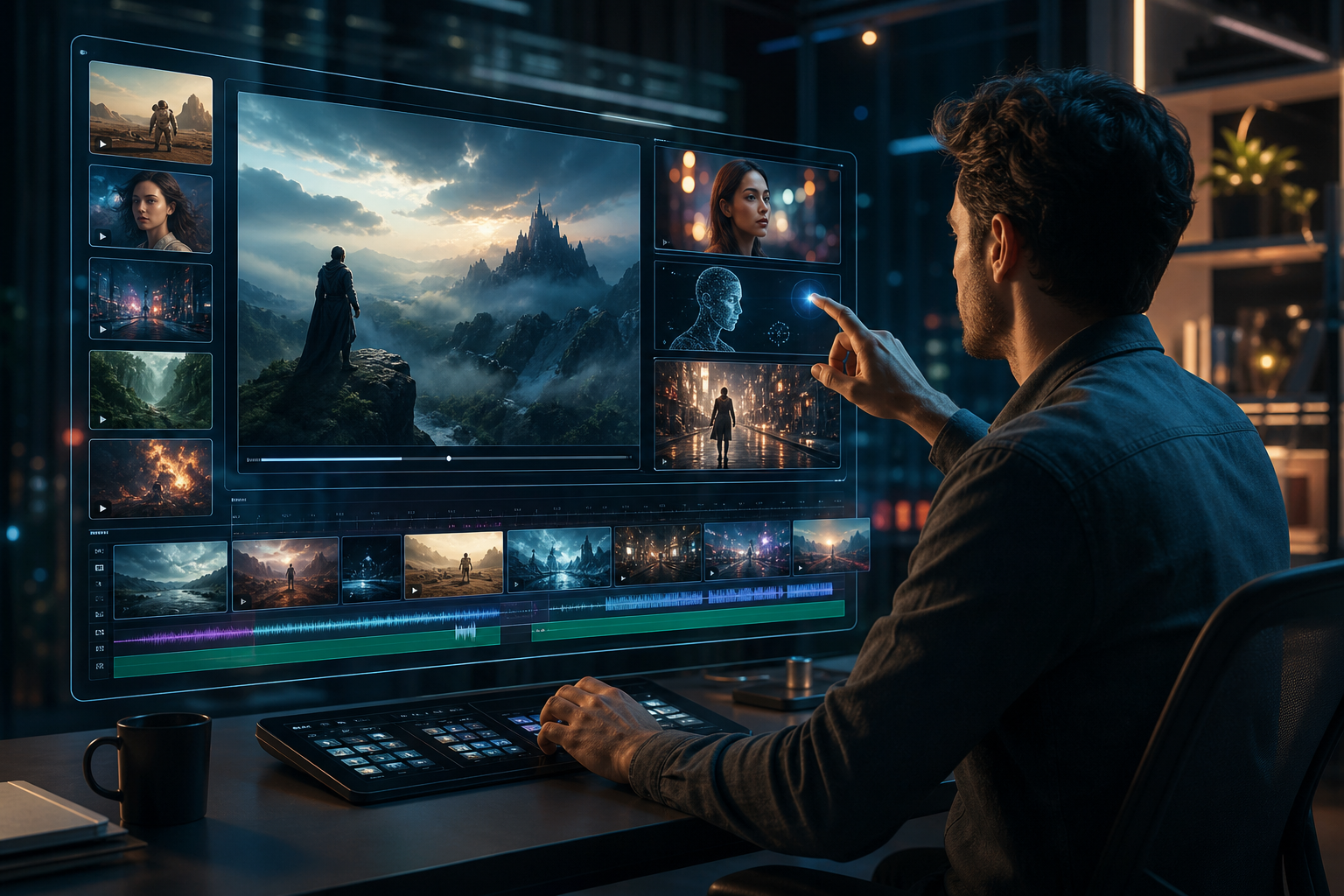
The world of creative content is undergoing a seismic shift, driven by the relentless advancement of artificial intelligence. Nowhere is this more apparent than in video production, where AI video tools are emerging as powerful allies, changing how stories are conceived, crafted, and consumed.
But amidst the hype and excitement, a crucial question arises: what can these tools genuinely accomplish right now, and where do their limitations lie? For professionals in design, education, and content creation, understanding this distinction is key to leveraging AI effectively without falling victim to unrealistic expectations.
The AI Video Revolution: A Primer for Creatives
For those new to the space, AI video tools leverage machine learning algorithms to automate, assist, or even generate various aspects of video production. This can range from simple tasks like transcription to complex operations like synthesizing entire scenes from text prompts.
Generative AI, in particular, stands at the forefront of this revolution. It enables machines to create original content, including video, that often mimics human-created output. This capability opens up unprecedented opportunities for efficiency and creative exploration.
Defining AI Video Tools: A Spectrum of Innovation
The term “AI video tools” encompasses a broad array of technologies. These tools can be categorized by their primary function, offering diverse solutions for different stages of the video workflow.
- Generative Video: Tools that create video from text, images, or audio prompts.
- Assisted Editing: AI-powered features within traditional editing software that streamline tasks.
- Enhancement & Upscaling: AI used to improve video quality, resolution, or frame rates.
- Automation: Tools that automate routine tasks like subtitling, scene detection, or clip organization.
This spectrum highlights AI's versatility, from foundational enhancements to groundbreaking generative capabilities. Each type serves a unique purpose in the evolving creative ecosystem.
What AI Video Tools Can Do Right Now: Empowering Creativity
Today's AI video tools are more sophisticated and accessible than ever before. They offer practical solutions that significantly enhance productivity and expand creative possibilities for both seasoned professionals and emerging artists.
Understanding these capabilities is crucial for anyone looking to integrate AI into their workflow. From accelerating post-production to enabling entirely new forms of content, the impact is undeniable.
Accelerated Production Workflows
One of the most immediate benefits of AI is its ability to speed up traditionally time-consuming tasks. This includes automating processes that once required manual effort, freeing up creators for more conceptual work.
- Automated Transcription & Subtitling: AI accurately transcribes spoken dialogue and generates captions, saving hours for editors and improving accessibility.
- Intelligent Editing & Scene Detection: Tools can analyze footage, identify key moments, and even suggest edits based on content and narrative flow.
- Color Correction & Grading Presets: AI can analyze an image or video and suggest optimal color adjustments, or apply consistent grading across multiple clips.
- Object Removal & Rotoscoping: Complex masking and object removal tasks are simplified, allowing for cleaner visuals and more dynamic compositions.
These efficiencies translate directly into faster project turnaround times, allowing creatives to focus on the artistic vision rather than repetitive technical tasks.
Groundbreaking Generative Capabilities
Generative AI is perhaps the most exciting frontier, enabling the creation of entirely new visual elements and even full video sequences. These capabilities are rapidly maturing, offering innovative ways to produce content.
- Text-to-Video Generation: AI can now create short video clips or animations from simple text descriptions, offering quick visual placeholders or conceptualizations.
- Image-to-Video & Video Style Transfer: Transform static images into dynamic clips or apply the aesthetic style of one video to another.
- Synthesized Voice-overs & Avatars: Generate realistic voice-overs in various languages and create lifelike digital avatars for presentations or explainer videos.
- AI-Powered Stock Footage Generation: Generate custom stock footage or backgrounds that perfectly match a project's specific requirements, rather than relying on generic libraries.
Platforms like Adobe Firefly are integrating these generative features directly into creative suites, empowering users with unprecedented control and accessibility. Learning these tools is becoming essential for modern creatives; Creative Nation Academy offers Adobe Certified Professional courses to master these skills.
Personalization and Accessibility Enhancements
AI also plays a vital role in making video content more accessible and personalized. This broadens audience reach and improves engagement for diverse viewers.
Features like real-time language translation for subtitles or dubbing expand content's global reach. AI can also adapt video content to individual user preferences, creating a more tailored viewing experience.
Current Limitations: Where Human Touch Remains Essential
Despite their impressive advancements, AI video tools are not a magic bullet. They have significant limitations that underscore the irreplaceable value of human creativity, critical thinking, and ethical judgment.
Recognizing these boundaries is crucial for maintaining quality, authenticity, and professional standards. AI is a tool, not a replacement for human ingenuity.
Lack of Nuance and Emotional Depth
AI struggles with the subtle intricacies of human emotion, cultural context, and subjective artistic expression. While it can mimic styles, it often lacks the authentic depth and originality of human-generated content.
Complex storytelling, satirical humor, or profound emotional narratives still require a human touch. The ability to convey true empathy or abstract concepts remains beyond AI's current grasp.
"Hallucinations" and Factual Inaccuracies
Generative AI can sometimes produce "hallucinations" – content that appears plausible but is factually incorrect or nonsensical. This is particularly problematic in educational or journalistic contexts where accuracy is paramount.
Creative professionals and educators must rigorously review AI-generated content for veracity and coherence. This emphasizes the need for strong editorial oversight, even with the most advanced AI video tools.
Ethical and Copyright Concerns
The ethical landscape surrounding AI-generated content is still evolving. Questions about ownership, fair use of training data, and the potential for deepfakes and misinformation pose significant challenges.
Creators must be mindful of potential biases embedded in AI models and ensure their use aligns with ethical guidelines. Our blog frequently discusses these emerging ethical considerations in AI.
Technical & Computational Demands
Generating high-quality, long-form video with AI requires substantial computational power and data. This can be a barrier for independent creators or those with limited resources, especially for complex projects.
While accessibility is improving, the most cutting-edge AI video tools still demand robust hardware or cloud-based solutions, which may incur significant costs.
Key Takeaways for Creatives and Educators
Navigating the evolving landscape of AI video tools requires a balanced perspective. Here are essential points to remember:
- AI excels at automating repetitive, time-consuming tasks, boosting efficiency dramatically.
- Generative AI opens new avenues for rapid prototyping and visual creation, especially for short-form content.
- Human creativity, emotional intelligence, and critical judgment remain indispensable for compelling storytelling.
- Always verify AI-generated content for accuracy, especially in educational or factual contexts.
- Stay informed about the ethical implications and copyright considerations of using AI in your work.
- Embrace AI as a powerful assistant that augments, rather than replaces, your creative skills.
The Future of Video: A Human-AI Collaboration
The trajectory of AI video tools points towards an increasingly collaborative future. Instead of replacing human creators, AI is poised to become an indispensable partner, handling the technical heavy lifting and providing creative sparks.
The real power will lie in the synergy between human ingenuity and AI's processing capabilities. Professionals who master this collaboration will be at the forefront of the next wave of creative innovation.
For educators, this means equipping students with the skills to effectively use AI video tools while reinforcing critical thinking and ethical considerations. Creative Nation Academy is dedicated to offering training that bridges this gap, preparing you for the future of digital content. Discover our upcoming workshops and events to stay ahead.
Frequently asked questions
- Are AI video tools good enough to replace human video editors?
- No, AI video tools are not yet capable of fully replacing human video editors. While they can automate many repetitive tasks and generate initial content, they lack the nuanced understanding, emotional intelligence, and creative judgment essential for complex storytelling and polished final products. AI serves as a powerful assistant, augmenting human capabilities rather than substituting them.
- What kind of video content can AI generate today?
- Today's AI can generate a variety of video content, including short clips from text descriptions, basic animations, style transfers, and even realistic digital avatars with synthesized voices. It's particularly effective for creating placeholders, conceptual visualizations, or automating elements like transitions and basic effects. However, complex, long-form narrative videos with deep emotional resonance still require significant human input.
- How can creatives and educators best utilize AI video tools?
- Creatives and educators can best utilize AI video tools by focusing on their strengths: automating mundane tasks (like transcription, subtitling, and basic editing), generating quick visual prototypes, and enhancing existing footage. Educators can use AI to create engaging learning materials more efficiently, while creatives can streamline workflows and explore new visual concepts. It's crucial to apply critical oversight to all AI-generated content.
- What are the main ethical concerns with using AI for video creation?
- Key ethical concerns include potential copyright infringement from AI models trained on existing art, the risk of generating deepfakes or misinformation, inherent biases from training data that can lead to skewed outputs, and questions of authenticity and originality. Users must exercise responsibility and verify AI-generated content to prevent the spread of inaccurate or harmful material.