
Revolutionize Your Workflow: After Effects' Native 3D Unleashed
After Effects' native 3D tools are changing the game for motion designers. This update streamlines workflows and unlocks new creative possibilities for animators.
By Rollan Bañez · July 21, 2026 · 8 min read
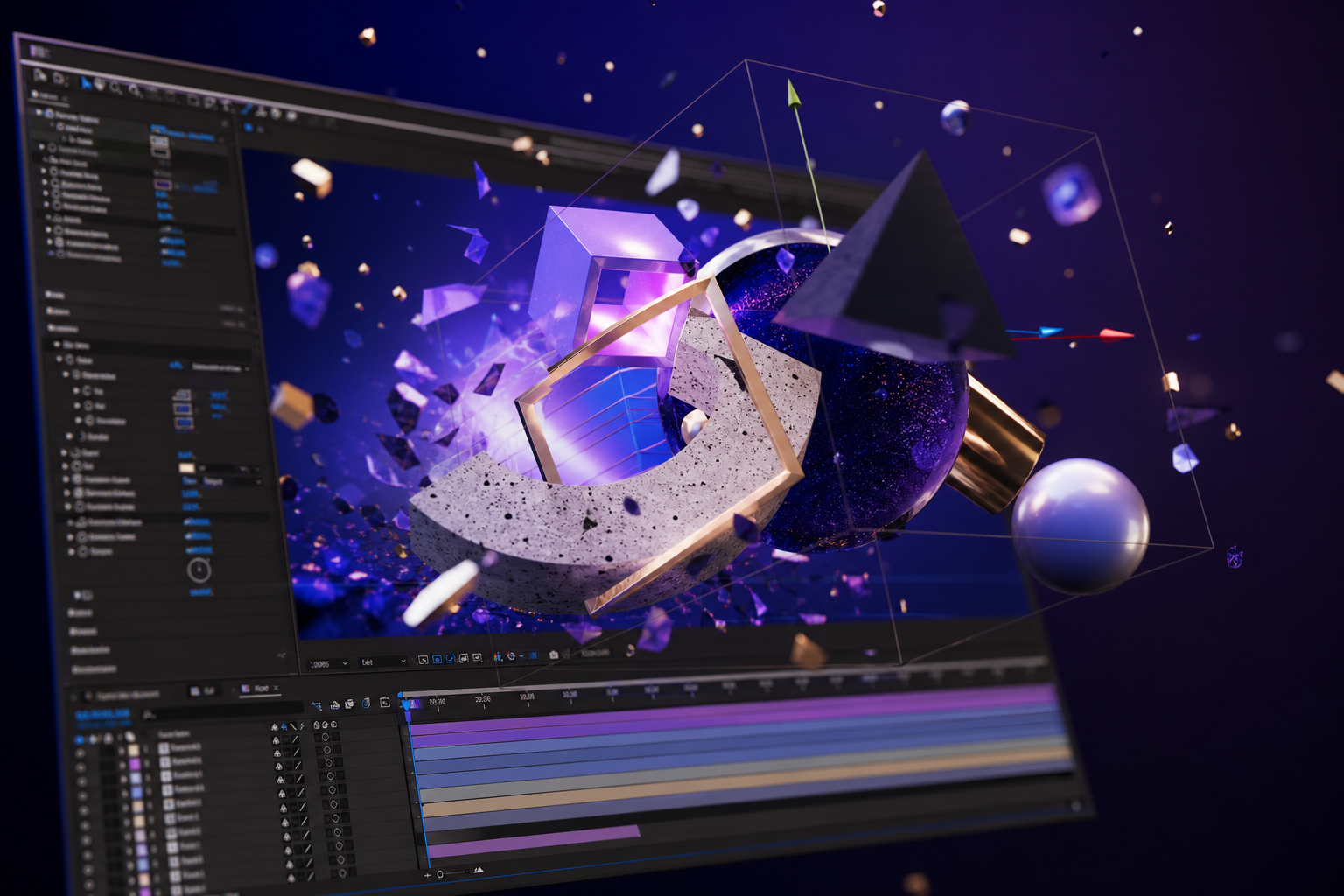
Motion design is a field constantly evolving, driven by technological advancements that empower creatives to push boundaries. Few updates have generated as much buzz and tangible impact as the introduction of native 3D tools within Adobe After Effects.
This significant enhancement is not just a cosmetic change; it's a fundamental shift in how designers approach complex animations, offering unprecedented speed and creative freedom directly within their familiar workspace. For professionals and aspiring artists alike, understanding this development is crucial.
The Paradigm Shift: From External to Native
For years, creating elaborate 3D elements in After Effects often involved a laborious dance between multiple software applications. Designers would model and animate in dedicated 3D suites like Cinema 4D or Blender, then painstakingly import and composite their renders into After Effects.
This workflow, while effective, introduced bottlenecks: increased rendering times, complex file management, and a disjointed creative process. Each iteration often required round-tripping between programs, hindering the intuitive flow of motion design.
What is Native 3D in After Effects?
Native 3D refers to the ability to create, manipulate, and animate 3D objects and scenes directly within After Effects, without relying on third-party plugins for core functionality. This includes 3D models, cameras, lights, and effects, all integrated into the application's existing timeline and interface.
This integration supports real-time rendering and manipulation, significantly reducing the friction associated with 3D work. It means designers can maintain a continuous creative focus within one application.
Accelerating Creative Workflows: Key Benefits
The impact of native 3D on motion design workflows is profound. It streamlines the creative process, allowing for faster iteration and more complex visual narratives.
- Reduced Round-Tripping: Eliminates the need to constantly switch between After Effects and external 3D software for minor adjustments or quick renders.
- Seamless Integration: 3D layers behave like native After Effects layers, integrating directly with existing effects, cameras, and lights.
- Faster Iteration: Changes to 3D elements can be previewed and adjusted in real-time, drastically cutting down on revision cycles.
- Enhanced Compositing: Achieving photorealistic integration of 3D elements with 2D footage becomes smoother and more intuitive.
- Accessibility: Lowers the barrier to entry for motion designers who previously found traditional 3D software intimidating or too time-consuming to master.
These benefits translate directly into increased productivity and higher quality output, allowing designers to dedicate more time to creative exploration rather than technical workarounds.
After Effects' 3D Revolution: Behind the Scenes
Adobe's commitment to enhancing After Effects' 3D capabilities has been a multi-year journey, culminating in powerful features like the Advanced 3D Render Engine and support for GLTF and Cinema 4D Lite files.
These developments signify a strategic move to position After Effects as an all-in-one hub for motion graphics. The software now intelligently handles depth, lighting, and occlusion, bringing a new level of realism previously difficult to achieve without dedicated 3D expertise.
Expert Perspectives on the Update
Industry experts universally praise the shift. Sarah Jenkins, a veteran motion designer, notes, "The native 3D in After Effects isn't just about efficiency; it's about empowerment. It democratizes 3D animation for so many more creatives."
Another expert from a leading animation studio commented, "Our team's motion design workflow has seen a remarkable boost. Projects that used to take weeks of back-and-forth are now completed in days, allowing us to take on more ambitious jobs." This sentiment highlights the significant competitive advantage it offers.
Real-World Impact: Careers and Creative Projects
The implications of this enhanced native 3D After Effects integration extend to individual careers and the broader creative industry. Animation studios are seeking designers proficient in these integrated workflows, making this a critical skill for career advancement.
For freelancers, the ability to deliver sophisticated 3D motion graphics without requiring multiple expensive licenses or complex software setups means increased project scope and profitability. This fosters a more agile and competitive creative landscape.
Applications Across Industries
From marketing campaigns to user interface animations and broadcast graphics, the demand for compelling 3D visuals continues to grow. Native 3D in After Effects allows designers to meet this demand with greater flexibility.
Educational content, product visualizations, and immersive experiences are all benefiting from designers who can rapidly iterate on 3D concepts. Creative Nation Academy's Adobe Certified Professional training explores these cutting-edge techniques in depth.
Key Takeaways
- Native 3D in After Effects fundamentally changes traditional motion design workflows.
- It significantly reduces the need for complex external 3D software integrations.
- Benefits include faster iteration, seamless compositing, and increased creative freedom.
- The update makes advanced 3D animation more accessible to a wider range of designers.
- Proficiency in native 3D After Effects tools is becoming a highly sought-after skill in the industry.
- This technology empowers creatives to produce higher quality and more complex visual content efficiently.
The integration of robust native 3D tools within After Effects marks a pivotal moment for motion designers. It streamlines the creative process, fostering greater efficiency and enabling previously complex artistic visions to be realized with unprecedented ease.
As this technology matures, we can anticipate even more sophisticated features and a further blurring of lines between 2D and 3D animation. Staying abreast of these developments, perhaps by attending an upcoming event, is essential for any creative professional looking to remain at the forefront of motion design.
Frequently asked questions
- What specifically does 'native 3D' mean in After Effects?
- Native 3D in After Effects means that you can create, manipulate, and animate 3D objects, cameras, and lights directly within the software's interface without needing to import elements from external dedicated 3D programs. This integration allows for real-time adjustments and compositing.
- How does native 3D in After Effects improve motion design workflows?
- It significantly improves workflows by reducing 'round-tripping' between different software, enabling faster iteration and previewing of effects. Designers can integrate 3D elements seamlessly with 2D footage and existing effects, leading to more efficient and fluid creative processes.
- Do I still need external 3D software if After Effects has native 3D?
- For highly complex 3D modeling, sculpting, or advanced simulations, dedicated 3D software may still be necessary. However, for many common motion graphics tasks involving text, logos, or simple geometry, native 3D in After Effects can often handle the entire workflow, reducing dependency on other programs.
- What are the career implications of mastering native 3D in After Effects?
- Mastering native 3D in After Effects makes you a more versatile and efficient motion designer. It is an increasingly in-demand skill, opening doors to more sophisticated projects and strengthening your position in the job market, as studios and clients seek all-in-one solutions.