Boost Student Success: Adobe Research Unlocks Creativity & AI in Education
New Adobe research highlights a significant connection between integrating creativity and AI tools in education and improved academic outcomes for students, offering valuable insights for educators.
By Rollan Bañez · July 23, 2026 · 8 min read
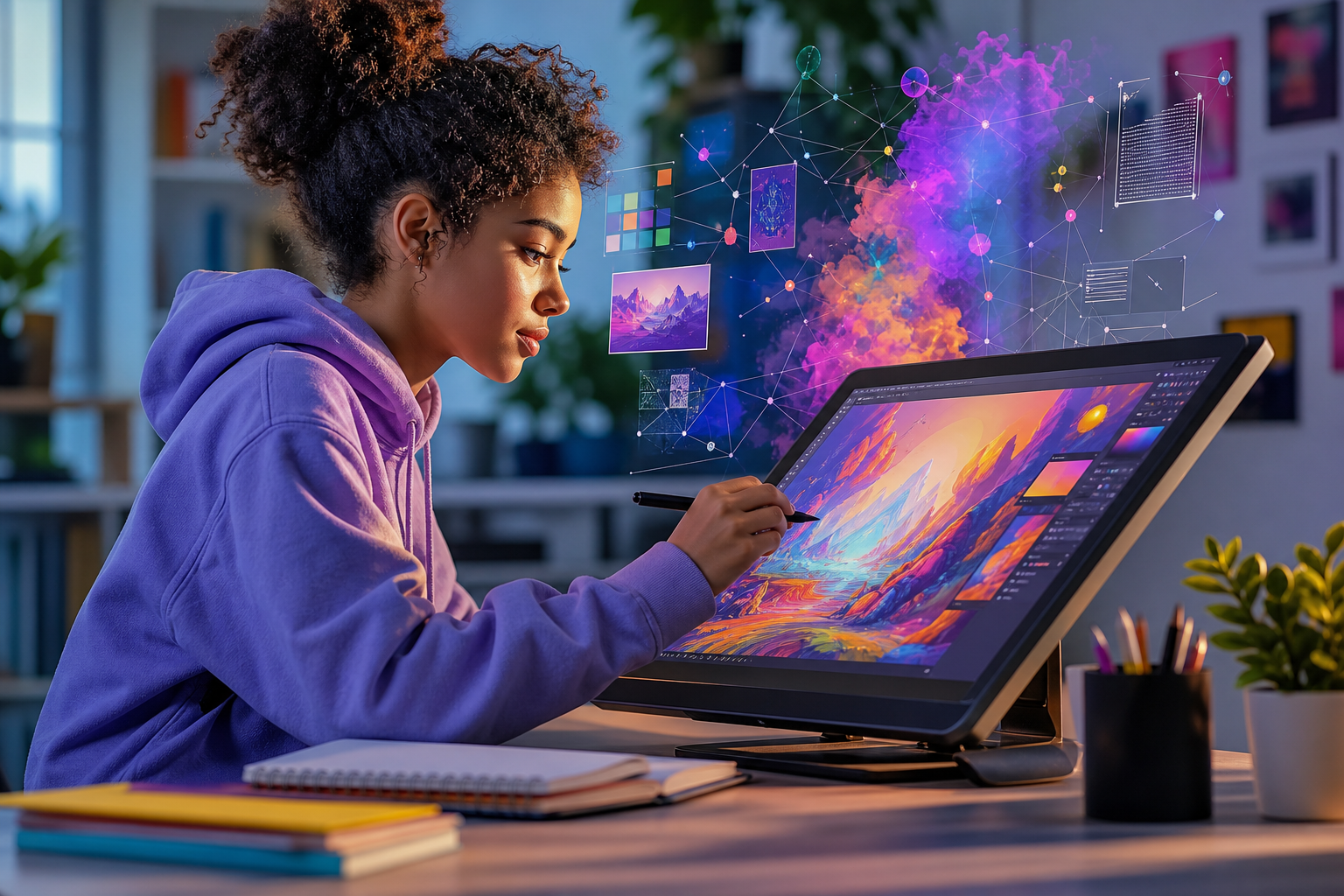
In today's rapidly evolving educational landscape, equipping students with future-ready skills is paramount. A groundbreaking new study from Adobe sheds light on a powerful synergy: how integrating creativity and AI tools can dramatically enhance academic outcomes for students across all levels. This research provides a compelling blueprint for educators looking to innovate their teaching strategies.
The findings resonate particularly with institutions like Creative Nation Academy, where fostering digital literacy and creative problem-solving is central to our mission. Understanding these connections is crucial for preparing students for successful creative careers in a world increasingly shaped by artificial intelligence.
Understanding the Modern Educational Shift
For decades, traditional education often prioritized rote memorization and standardized testing. However, the demands of the 21st-century workforce require a different approach. Employers now seek individuals who can think critically, adapt quickly, and innovate. This shift underscores the importance of creative skills.
Digital natives, while comfortable with technology, sometimes lack the structured creative thinking needed for complex problem-solving. This is where intentional integration of creative tools and AI literacy becomes vital. It’s not just about using software; it’s about fostering a mindset.
The Role of Creativity in Learning
Creativity is more than just artistic expression; it encompasses problem-solving, critical thinking, and innovation. When students engage in creative projects, they develop a deeper understanding of concepts and retain information more effectively.
This active learning approach encourages experimentation and reduces the fear of failure. It transforms passive consumption of information into active construction of knowledge, leading to more robust academic outcomes.
AI as an Educational Catalyst
Artificial intelligence is no longer a futuristic concept but a present-day reality in education. From personalized learning platforms to intelligent tutoring systems, AI offers unprecedented opportunities to tailor educational experiences.
Properly integrated, AI tools can automate repetitive tasks, provide immediate feedback, and even help students generate initial ideas, freeing up time for more complex critical and creative thinking. It acts as a powerful assistant rather than a replacement for human intellect.
Adobe's Landmark Research: Key Findings
Adobe's recent study, surveying thousands of educators and students globally, rigorously investigates the impact of creative and AI technologies in the classroom. The research provides empirical evidence supporting what many educators intuitively believe about the power of these tools.
The findings indicate a clear positive correlation between exposure to creative and AI-powered learning environments and improved student performance across various metrics. This isn't just about grades; it's about deeper engagement and skill acquisition.
Significant Academic Improvement
One of the study's most compelling figures reveals that students who frequently use creative tools and AI in their coursework report higher academic achievement. A notable percentage of educators observed improved critical thinking and analytical skills.
- 73% of educators believe creative and AI tools improve student engagement.
- 69% observe an enhancement in problem-solving abilities.
- 65% report increased student retention of complex material.
- Students using these tools consistently showed better outcomes in project-based assessments.
Enhanced Digital Literacy and Future Readiness
Beyond traditional metrics, the research highlights a significant boost in digital literacy. Students become more adept at navigating complex software and understanding AI principles, skills crucial for future careers.
This early exposure to cutting-edge technologies prepares them for a workforce where digital fluency is a basic requirement. It bridges the gap between theoretical knowledge and practical application, a key aspect of certified Adobe training.
Paving the Way for Equity
The study also touched upon the potential of these technologies to address educational equity. When accessible, creative and AI tools can level the playing field, providing personalized support and diverse learning pathways for all students, irrespective of background.
This allows educators to cater to different learning styles and paces, ensuring every student has the opportunity to thrive. It moves beyond a one-size-fits-all approach to education.
Expert Perspectives and Real-World Impact
Educators and industry leaders are increasingly recognizing the transformative potential of combining creativity and AI in educational settings. Their insights provide valuable context to Adobe's research findings.
"Integrating AI into creative projects isn't just about using a new tool; it's about fostering an entirely new way of thinking," states Dr. Evelyn Reed, an educational technology specialist. "Students learn to prompt, iterate, and refine with intelligent assistance, accelerating their learning curve."
Transforming Classroom Experiences
Across various disciplines, educators are implementing these insights. In art classes, AI tools assist with generating initial concepts or exploring different styles, freeing students to focus on refinement and personal expression.
In science, AI can help analyze data or visualize complex systems, while creative tools aid in presenting findings engagingly. This multidisciplinary application underscores the versatility of artificial intelligence and creative software.
Preparing for Creative Careers
For students aspiring to professions in graphic design, film, marketing, or game development, proficiency in creative software combined with an understanding of AI is non-negotiable. Building a strong portfolio often involves showcasing innovative use of these tools.
Institutions like Creative Nation Academy are at the forefront, offering specialized programs and Adobe Certified Professional pathways. These equip students with industry-recognized skills and credentials, preparing them for highly competitive fields.
Key Takeaways for Educators
The Adobe research offers actionable insights for educators navigating the evolving educational landscape. Embracing this shift is not just beneficial but increasingly essential for student success.
- Prioritize integrating creative projects across all subjects, not just arts.
- Explore AI tools as assistants for learning, idea generation, and personalized feedback.
- Focus on developing critical thinking skills alongside digital literacy.
- Invest in professional development for educators on AI and creative software.
- Encourage experimentation and collaborative learning environments.
- Leverage these technologies to foster deeper student engagement and retention.
Conclusion and Future Outlook
The evidence is clear: the thoughtful integration of creativity and AI in education significantly boosts academic outcomes and prepares students for a dynamic future. Adobe's research provides a robust framework for understanding this impactful relationship.
As technology continues to advance, the synergy between human creativity and artificial intelligence will only deepen. Educators who embrace this paradigm shift will empower a generation of learners ready to innovate, adapt, and lead in a world where digital fluency and creative problem-solving are paramount.
Frequently asked questions
- What is the main finding of Adobe's new research on education?
- Adobe's research indicates that integrating creativity and AI tools into curricula significantly improves academic outcomes, student engagement, problem-solving abilities, and digital literacy across various disciplines.
- How can AI tools enhance creative processes in students?
- AI tools can assist students by generating initial concepts, providing personalized feedback, automating repetitive tasks, and helping visualize complex data. This allows students to focus more on critical thinking, refinement, and expressing their unique ideas.
- What kind of skills do students gain by combining creativity and AI in learning?
- Students gain enhanced critical thinking, digital literacy, problem-solving, innovation, and adaptive learning skills. These are highly sought after in modern creative careers and various industries, ensuring better preparation for the future workforce.
- Where can educators find resources to implement these strategies?
- Educators can explore professional development programs, online courses, and specialized certifications like those offered by Creative Nation Academy (e.g., <a href="/events">workshops and webinars</a>). Adobe also provides educational resources and guides for integrating their creative tools effectively.