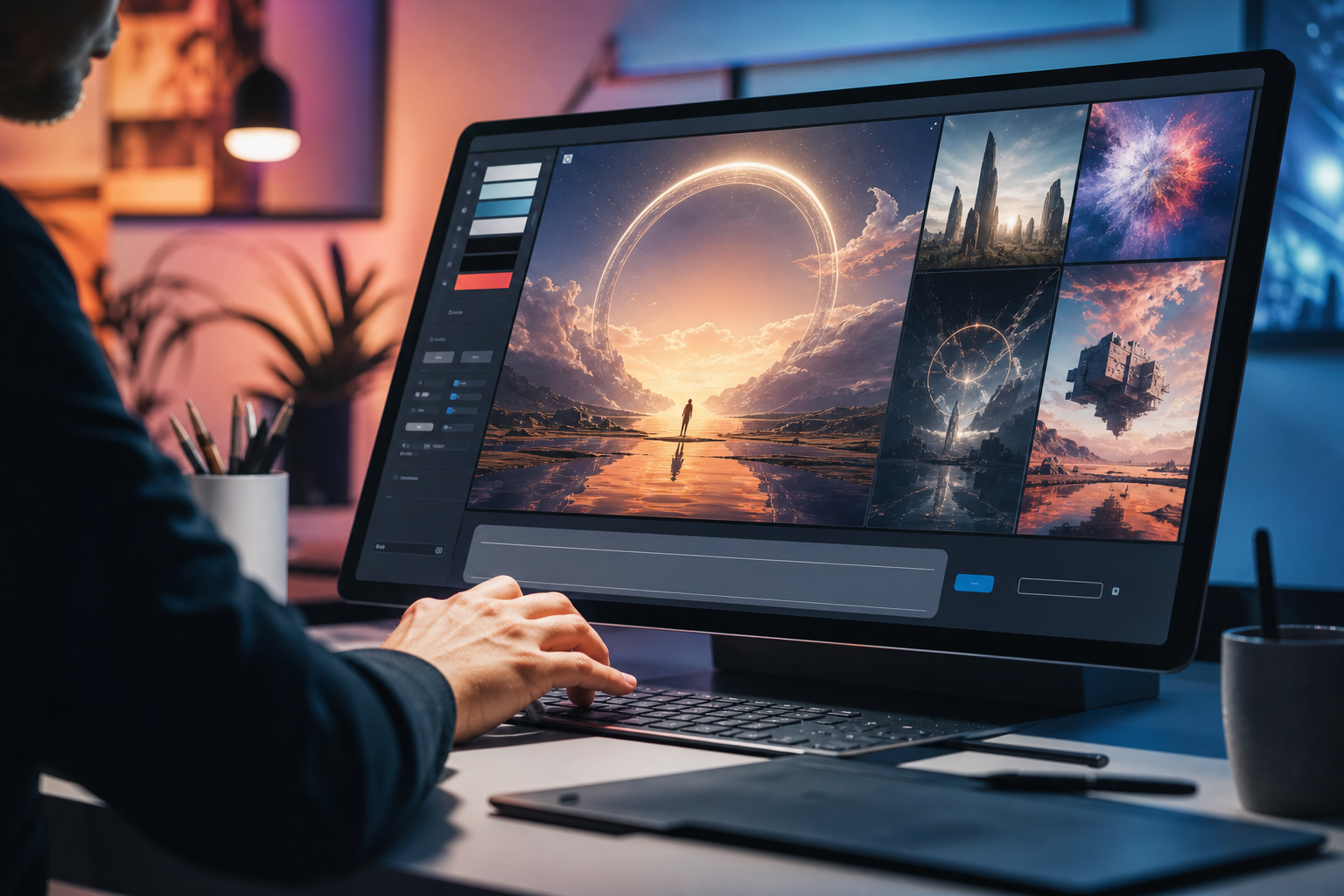
Adobe to Acquire Topaz Labs: A New Era for Creative Cloud AI
Adobe is set to integrate Topaz Labs' industry-leading AI enhancement tools, promising a future of lightning-fast local upscaling and sharpening within Creative Cloud.
By Rollan Bañez · June 28, 2026 · 6 min read
The landscape of digital creation is undergoing a seismic shift. Adobe has announced its intent to acquire Topaz Labs, the industry leader in specialized AI image and video enhancement software. This move marks a strategic pivot for Adobe, moving beyond cloud-based generation toward high-performance, on-device AI optimization.
For years, Topaz Labs has been the gold standard for photographers and videographers needing to rescue low-resolution assets. By bringing this expertise in-house, Adobe is signaling that the next phase of the Creative Cloud will be defined by quality, speed, and local hardware utilization.
Connecting Firefly with Local AI Power
While Adobe Firefly has revolutionized generative AI through the cloud, Topaz Labs excels at "restorative AI." Their models specialized in denoising, sharpening, and upscaling perform complex calculations directly on a user’s GPU or NPU. This acquisition bridge the gap between cloud-based creativity and local machine performance.
On-Device vs. Cloud AI
- Cloud AI (Firefly): Excellent for generating new images from scratch but requires massive server bandwidth.
- On-Device AI (Topaz): Faster for iterative edits, works without a constant internet connection, and offers superior privacy.
- Hybrid Workflows: The future likely involves generating a concept in the cloud and refining the resolution locally using Topaz-powered engines.
This integration will be particularly beneficial for users who have participated in Adobe Certified Professional training. Understanding these advanced tools will soon become a baseline requirement for high-end production environments.
The Impact on Photography and Video Professionals
Photographers often struggle with sensor noise in low-light conditions or the need to crop images significantly for large-format prints. Topaz Photo AI has historically outperformed Photoshop’s native "Preserve Details 2.0" upscaling. Integrating these neural networks directly into Lightroom and Camera Raw will streamline post-processing immensely.
Video professionals stand to gain even more. Topaz Video AI is renowned for its ability to convert 1080p footage to 4K and even perform complex frame interpolation for slow-motion effects. By embedding these capabilities into Premiere Pro and After Effects, Adobe will drastically reduce the need for expensive third-party plugins.
Key Takeaways
- Restorative Power: Adobe adds industry-leading sharpening and denoising to its native toolkit.
- Speed Optimization: Topaz’s expertise in on-device AI will make Creative Cloud tools faster and more responsive.
- Firefly Synergy: Generative assets can be instantly upscaled to print-ready resolutions without leaving the app.
- Educational Upskilling: Educators will need to adapt curricula to include automated restoration and enhancement workflows.
- Hardware Efficiency: Better utilization of Apple Silicon and NVIDIA RTX hardware for creative tasks.
What This Means for Educators and Students
At Creative Nation Academy, we observe that the role of the creative is shifting from "technician" to "director." As tools become more capable of fixing technical errors automatically, the focus of design education must shift toward conceptual thinking and art direction.
Schools and universities should prepare for a version of Photoshop that handles the "heavy lifting" of image quality. If you are an educator looking to stay ahead of these changes, check our latest articles on AI implementation in the classroom to ensure your students remain competitive.
A More Cost-Effective Workflow
Currently, many professionals pay a separate subscription or licensing fee for Topaz software alongside their Creative Cloud subscription. A unified ecosystem will likely simplify billing and reduce the total cost of ownership for creative studios. It also eliminates the friction of exporting and re-importing files between different applications.
Future Outlook: Towards a More Intelligent Creative Cloud
The acquisition of Topaz Labs is not just about adding features; it is about infrastructure. Topaz has mastered the art of making AI models run efficiently on consumer hardware. As Adobe continues to expand Firefly, this optimization will be the key to maintaining a competitive edge against burgeoning AI-native startups.
We expect to see the first deep integrations within the next twelve months. Designers who wish to be vetted for these evolving roles can join our Creative Registry to showcase their proficiency with the latest Adobe technologies.
The fusion of Adobe’s creative reach and Topaz’s technical prowess promises a future where technical limitations—like blur, noise, or low resolution—no longer stand in the way of a creator's vision.
Frequently asked questions
- Will Topaz Labs products still be available as standalone apps?
- While Adobe has not yet finalized its long-term roadmap, they typically maintain popular standalone tools for a transition period before fully integrating them into the Creative Cloud ecosystem.
- Does this mean Photoshop's upscaling will improve?
- Yes. The acquisition is specifically focused on leveraging Topaz's superior on-device AI models for sharpening, denoising, and high-quality upscaling directly within Photoshop and Lightroom.
- Will this increase the cost of my Creative Cloud subscription?
- Adobe has not announced any pricing changes related to this acquisition. Typically, these features are added as value-increases to existing subscription tiers to stay competitive.